
Flags of Convenience Part Two: Enforcement Gaps and a Registry Solution (Part II)
December 4, 2025
By Tanya Tono,
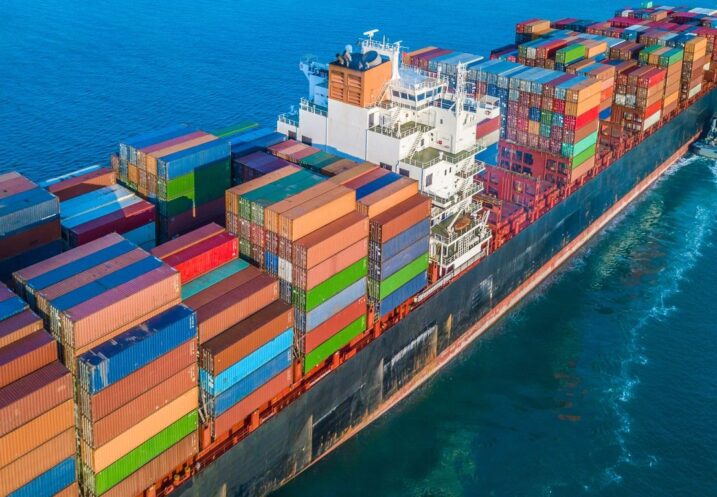
In practice, U.S. port inspections often treat drug seizures as isolated cargo incidents, not opportunities to investigate the ship or its owners. For example, U.S. Customs and Border Protection (CBP) officers in San Juan intercepted 573 pounds (260 kg) of cocaine hidden in containers aboard the Bahamas-flagged ferry M/V Kydon in June 2020. A few weeks later, the same route produced another 492-pound haul. These busts made headlines, but CBP’s reports focused only on the contraband value and concealment. The Kydon itself sailed on, the vessel and its nominal owner were never publicly pursued. In effect, once illicit cargo is unloaded, the ship vanishes from the case files.
This enforcement gap is no accident: CBP’s mandate ends with cargo interdiction, not maritime registry investigations. As analysts note, open registries facilitate this opacity—”vessel registration is cheap and easy, with beneficial ownership information not required,” meaning unscrupulous operators can hide behind shells. In short, smugglers can offload drugs in a U.S. port while the ship slips away unnoticed into international waters.
Despite these frequent seizures, there is little follow-up on the flagged vessels themselves. Unless a ship fails a port-state safety inspection or is interdicted by the Coast Guard at sea, it usually avoids penalty. FoC vessels simply rotate among international ports with comparatively minimal oversight. The result is a self-perpetuating cycle: criminals use opaque shipping registries to conceal illicit cargo shipments while law enforcement chases containers rather than criminal rings. This pattern is well documented in fisheries and smuggling cases, authorities catch the product but not the phantom owners behind it. In effect, each vanished shipment underscores the core flaw of the FoC system: without tracing a seized shipment back to its ship or hidden owner, the flag serves as a cloak of immunity.
The challenge is not merely one of enforcement resources but of legal architecture. Current international frameworks lack mechanisms to compel ownership transparency at the point where it matters most: when vessels seek access to major ports. This structural weakness allows the same ships and operators to continue illicit activities even after cargo seizures, confident that their corporate anonymity will protect them from consequences beyond the loss of individual shipments.
By contrastHowever, the Federal Maritime Commission (FMC) in Washington has beguncan deploying tools that target the vessel side of the problem. Under U.S. law (Section 19 of the Merchant Marine Act of 1920, 46 U.S.C. §42101), the FMC can impose strong sanctions on foreign carriers that create “unfavorable” conditions in U.S. trade. For example, Section 19 authorizes hefty port call fees (up to $1 million per voyage), limits on how often a ship can sail to U.S. ports, and even bans on certain cargoes. These powers lay largely dormant since the 1990s, but the agency has now reactivated them. On May 21, 2025, the FMC announced a broad Section 19 investigation of foreign flagging rules and open registries. This non-adjudicatory probe is gathering evidence and public comment on issues ranging from fraudulent registrations to regulatory arbitrage. In effect, the FMC is examining whether lax flags of convenience, from Panama and Liberia to the latest small registries, are harming U.S. trade and security. If so, it could eventually recommend rule changes or direct sanctions (such as new port restrictions) to curb those practices.
This shift reflects national security concerns as much as trade. FMC Chairman Louis Sola has explicitly linked FoCs to sanctions evasion, warning that carriers used by “reprehensible regimes” to dodge international rules would draw U.S. scrutiny. The FMC’s notice even cataloged abuses like “flag-hopping,” fraudulent registry certificates, and a “shadow fleet” of ships involved in smuggling or illicit finance. These problems were meant to be addressed by the global maritime regime: UNCLOS (the Law of the Sea) obligates each flag state to maintain a genuine link to its vessels, and in recent years the IMO has requiresd every ship to carry a unique IMO number and a unique company/owner ID. But as regulators now concede, those rules haven’t stopped phantom flags. In practice, without a mechanism to verify who truly controls each ship, even IMO identification schemes fall short. The U.S. investigation is effectively filling that gap by forcing transparency: if open registries won’t police themselves, the FMC may wield unilateral remedies.
Toward a Global Ship Ownership Registry
To close these loopholes once and for all, Global Financial Integrity recommends creation of a global ship registry tying every vessel to its ultimate owners. In essence, this would be a centralized, IMO- or port-state-managed database where each ship’s IMO number is linked to a verified beneficial owner (an individual or companythe Financial Action Task Force defines beneficial owner as “the natural person(s) who ultimately owns or controls” a legal entity), along with current contact details and any changes in name, flag, or owner. Port authorities could require ships to appear in the registry as a condition for call permits.
Such a system would mirror national corporate beneficial-ownership databases but in the maritime sphere. By mandating that registry entries be kept up-to-date and publicly accessible, each port call would cross-check the true owner of the vessel. This reform would dramatically increase transparency. As one international analysis notes, requiring a history of identity and ownership for every vessel (using IMO numbers as unique identifiers) “increases operational transparency” and helps deter illicit use.
The operational implementation of such a registry would require international coordination but could build on existing systems. The IMO already maintains vessel identification numbers and has established protocols for information sharing among maritime authorities. Expanding this infrastructure to include verified beneficial ownership would represent an evolution of current practice rather than a completely new system. The key innovation would be making ownership information mandatory, current, and accessible to port authorities at the point of entry.
In sum, pairing the FMC’s renewed scrutiny with a binding global registry could close the maritime transparency gap. Good intelligence on contraband cargoes is of little use if we don’t also know which vessels carry it. A centralized vessel-ownership register, hosted by the IMO or an international consortium of port states, would ensure that any suspicious ship can be rapidly identified and held accountable. That single reform would go a long way toward neutralizing the “cloak” that flags of convenience currently provide for illicit maritime activity.